Last updated 2026-08-18
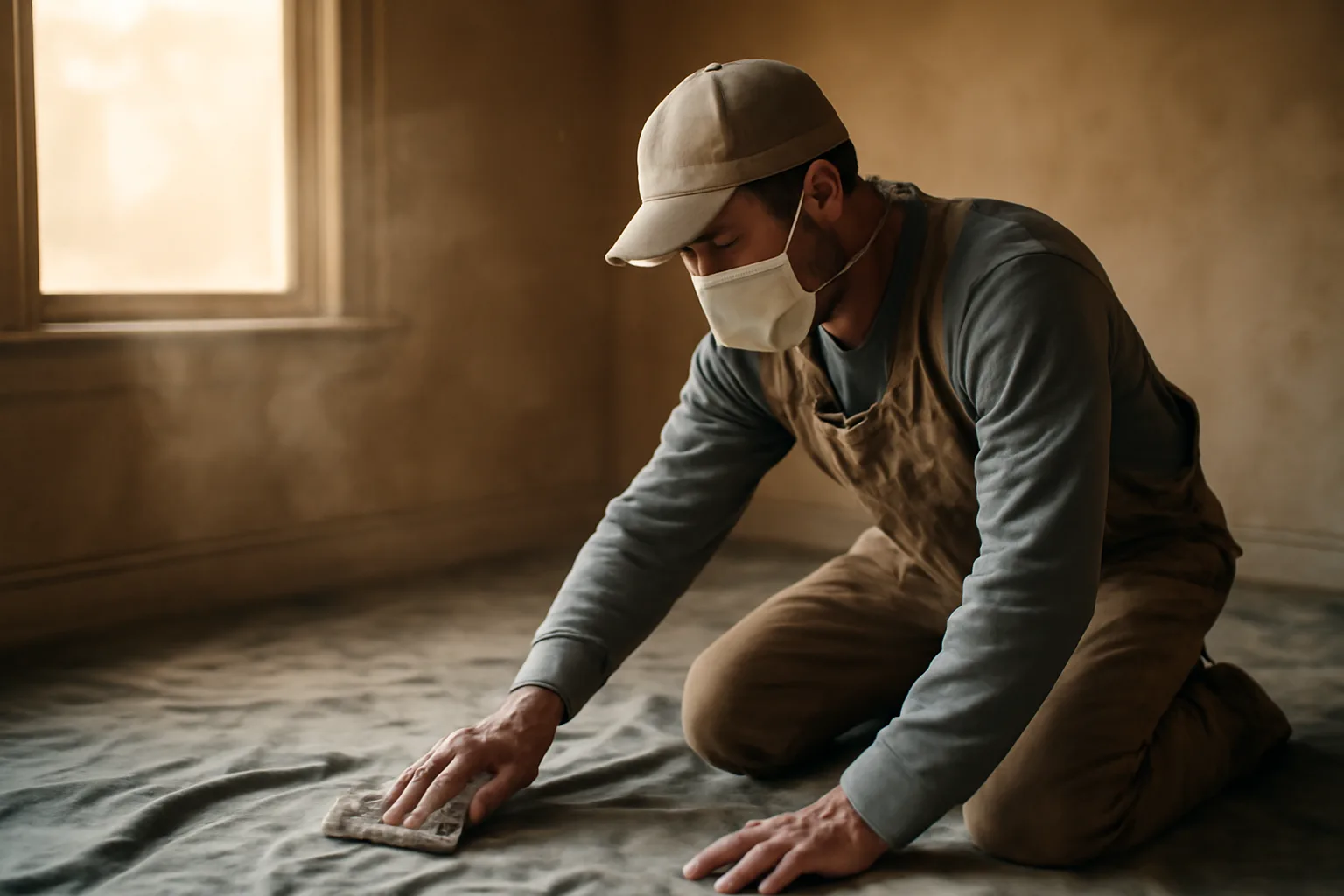
TL;DR
Arizona follows the federal EPA Renovation, Repair and Painting (RRP) rule directly. There is no separate Arizona state lead license. You need one certified renovator on staff who completes an 8-hour EPA-accredited training course, and your firm must apply for EPA firm certification. Total cost runs roughly $450-$600 for training plus a $300 EPA firm fee. Timeline from first class to certified firm: 2 to 4 weeks.
Does Arizona have its own lead RRP program, or do you follow the EPA?
Arizona is not an EPA-authorized state for lead-based paint programs. It runs directly under the federal Toxic Substances Control Act (TSCA) and the EPA’s 40 CFR Part 745 subpart E rule [1]. The Arizona Department of Environmental Quality (ADEQ) does not issue or require a separate state lead renovation license.
That changes the paperwork path compared to states like California or Utah. You do not file anything with a state board. Every form, fee, and approval comes from the EPA’s national office or its Region 9 office (which covers Arizona) [2]. This simplicity confuses people who expect a state-level hurdle, but it also means you have nobody to call at a state desk if the EPA process drags. It’s just you and the federal portal.
Practically, this means the question “Do you need a license for lead RRP in Arizona?” is answered in two parts: a person needs individual renovator certification (not a license) and the firm needs an EPA firm certification (a certificate, not a state license). Both are mandatory before you offer or perform any compensated renovation that disturbs more than 6 square feet of interior painted surface or 20 square feet of exterior painted surface in pre-1978 housing or child-occupied facilities.
Do you need a license for lead RRP in Arizona?
No state license exists. You need two things from the EPA: individual renovator certification and firm certification. The EPA issues a certificate with a firm certification number, and that is your authorization to operate [1].
For the individual: at least one employee must complete an EPA-accredited 8-hour initial renovator training course and pass the hands-on skills assessment. That person becomes a “certified renovator.” The certified renovator is responsible for training other workers on the job site, overseeing containment and cleaning, and performing the post-renovation cleaning verification [3].
The firm (a sole proprietor, LLC, or corporation) applies separately. The application is EPA Form 8500-33 for renovation firms. You submit it online via EPA’s CDX system or by mail with a $300 fee [4]. The firm certification is location-specific and not transferable if the business structure changes.
One nuance Arizona operators should know: if you work on tribal lands within the state, the rules can shift. Some tribes run their own EPA-authorized programs. Always confirm jurisdiction with the specific tribal housing authority before bidding a job [2].
How much does lead RRP certification cost in Arizona?
Total first-year cost ranges from about $750 to $900 for a single-person operation. The breakdown is tight because Arizona has no state application fees layered on top.
- Initial EPA-accredited renovator training (8-hour classroom + hands-on): $250 to $450, depending on the training provider. In-person providers in Phoenix and Tucson typically charge at the lower end; online blended courses with a virtual proctored session can push toward $400. [5][6]
- EPA firm certification fee: $300, paid via the CDX portal or check with the paper application. This covers a 5-year certification period. [4]
- EPA-certified lead test kit or an XRF analyzer, if you choose to offer testing voluntarily (not required for RRP compliance; you can rely on the lead-safe work practices presumption instead). EPA recognizes 3M LeadCheck and D-Lead test kits. A box of 8 swabs runs about $30-$45 on the shelf. An XRF is a multi-thousand-dollar instrument, not a startup cost I recommend. [7]
- HEPA vacuum and disposable supplies for containment (plastic sheeting, tape, respirators): budget $150-$250 for a first-job kit if you don’t already carry a HEPA vac. This isn’t a certification cost but it’s a hard regulatory requirement you cannot skip. [3]
LeadRRPPath’s one-time $149 kit compiles the firm application, study materials cross-referenced to the exam, and a compliance checklist. It is a paperwork acceleration tool, not a training course. The EPA course remains a separate cost. (/start)
The $300 firm fee is a known fixed point. Training costs vary by provider and location. Nobody publishes a full price index for Arizona RRP classes; call 2-3 local trainers for current pricing. Do not rely on a number older than 6 months.
How long does it take to get lead RRP certified in Arizona?
From standing start to “you can bid and start work,” the realistic range is 2 to 4 weeks. The fastest possible path is about 10 business days if everything lines up: you take a class on a weekend, file the firm application online Monday morning, and EPA processes it in under two weeks. That is rare but happens in low-volume months.
The training itself is one 8-hour day, sometimes split across two evenings for blended formats. After you complete the course, the training provider has up to 14 days to notify EPA. Then you wait for your certified renovator number to appear in the EPA database before you file the firm application, because the form asks for that number.
EPA’s stated processing time for firm certification applications is up to 90 days [4]. In practice, applications submitted electronically through CDX with accurate, complete information are often processed in 10 to 15 business days. Paper applications mailed to EPA’s lockbox add a week or more of mail and manual data entry.
The speed variables within your control: pick an accredited trainer with a fast electronic submission habit, file the day you get your renovator number, and pay the $300 online. The variable you cannot control: EPA workload. Late winter and early spring (February through April) see a surge as contractors prepare for the renovation season, and processing slows.
What should you look for in Arizona RRP training providers?
EPA maintains a searchable database of accredited training providers at epa.gov/lead [5]. Filter by state or ZIP code. Look for a provider whose instructor is more than accredited but has recent field experience; the teaching quality varies wildly. Ask the provider before you register: “When do you submit my course completion to EPA?” Get a specific answer. Some providers batch submissions weekly. Others submit the next business day. This directly affects your timeline.
Online live-streamed courses are EPA-accredited if they include a monitored in-person or proctored virtual hands-on component. A fully self-paced, no-assessor online course is not EPA-accredited. If someone sells you a “RRP certification online with no in-person assessment,” it is not valid, and you will fail an EPA enforcement audit. EPA requires a practical hands-on assessment for the initial 8-hour course [3].
Renovator refresher training is due every 5 years. The refresher is a 4-hour course. Some providers charge $175-$275 for it. The firm recertification is also every 5 years with another $300 fee [4]. Mark your calendar.
Step-by-step: the paperwork path for Arizona firms
1. Identify pre-1978 target properties in your service area. If you never touch those structures, you don’t need RRP certification. If you even occasionally bid on them, get certified preemptively. Turning down a job while you scramble for a cert costs more than the $300 fee.
2. Register for an EPA-accredited initial renovator course. Complete the 8 hours. You will receive a course completion certificate the day you pass; that is your temporary proof until EPA processes your entry.
3. Wait for the training provider to submit your completion electronically. Confirm they have done so.
4. Register for EPA’s CDX system at cdx.epa.gov, then submit the firm certification application and pay the $300 fee. You need your NAICS code, your certified renovator’s name and number (from step 3), and basic business details [4].
5. Receive your EPA firm certification certificate by email (usually PDF). This certificate must be available at every job site. Print it.
6. Obtain and stage your HEPA vacuum, 6-mil polyethylene sheeting, painter’s tape, respirators with P100 filters, and a copy of the EPA’s “Small Entity Compliance Guide” [3]. You must have the guide on site under the rule.
7. Before the first job, the certified renovator must provide on-the-job training to other crew members on lead-safe work practices and document it. No formal class is required for non-certified workers, but the documentation is mandatory [3].
Arizona-specific considerations: tribal lands, border region, and ADEQ
ADEQ has no regulatory authority over lead renovation. If you call ADEQ looking for a lead RRP license in Arizona, they will redirect you to the EPA. This has been a source of confusion for contractors moving from states with active lead programs [2].
The 22 federally recognized tribes in Arizona occupy over a quarter of the state’s land base. EPA’s general rule is that it retains RRP jurisdiction on tribal lands unless a tribe has received authorization to run its own program [8]. The Navajo Nation EPA, for example, operates independent environmental programs. If you work on Navajo Nation territory, contact the Navajo Nation EPA Superfund Program for current lead renovation requirements. This is not a paperwork technicality: failing to follow tribal requirements where they exist can result in federal enforcement and debarment from federal contracts.
In the border region (Yuma, Nogales, Douglas), some contractors cross into Mexico. U.S. EPA’s RRP rule applies to renovations on pre-1978 U.S. residential properties only. It does not cover work performed in Mexico, but U.S. firms that bid on federal or tribal housing in border counties should expect RRP compliance verification as part of the contract.
Common mistakes that cost Arizona contractors time and money
The most expensive mistake is confusion between “certified firm” and “certified renovator.” You cannot operate as a firm with just a trained guy and no EPA firm certification. The firm certification is a separate legal requirement with its own separate fee. EPA has fined firms for this. Penalties under TSCA section 16 can reach $46,000 per violation per day [1].
Another common failure: the certified renovator is not physically present during key phases. The regulation requires the certified renovator to be on-site during setup of containment, during work, and during cleaning verification. Sending the certified renovator to do an initial walkthrough and then leaving the rest to an uncertified crew is a violation [3].
Paperwork errors on the firm application: mismatched names, expired training records, or filing the firm application before the training provider has submitted the course completion. If EPA rejects your application for an administrative error, you start over with no refund of the fee. Review the form completely.
Finally, failing to keep records for 3 years. EPA requires firms to retain records of all certified renovators, worker training documentation, and project-specific lead-safe work practice checklists for a minimum of 3 years after the job is completed [9]. An audit that finds missing checklists is an easy penalty.
Enforcement reality in Arizona
EPA Region 9 conducts RRP inspections in Arizona, often triggered by tips, complaints, or referrals from local building departments. The agency has prioritized RRP enforcement since 2018 under the National Compliance Initiative [10]. Contractors in Phoenix, Tucson, and Flagstaff metro areas face the highest inspection density.
What an inspector verifies: firm certificate posted, certified renovator on site with current certification, proper containment set up, proper cleaning protocol followed, cleaning verification records completed, and that the firm has the required lead hazard information pamphlet to give to occupants (Renovate Right brochure) [3].
If you are operating under a handshake and a prayer, this is bad news. If you have the paperwork right and the plastic up, it’s a 20-minute walk-through. Most Arizona RRP inspections that find violations target the containment and cleaning steps, not the paperwork. Your plastic sheeting needs to extend 6 feet beyond the work area perimeter for exterior jobs and be taped and secured. No shortcuts.
What you actually need to buy before your first job (exact list)
EPA’s model renovation checklist defines exactly what must be on site. Here is the no-padding version [3]:
- HEPA-filtered vacuum (standard shop vac is not acceptable, even with a HEPA filter insert; the vac must be designed as a HEPA unit).
- 6-mil polyethylene sheeting sufficient to cover the floor and seal work area openings.
- Painter’s tape or equivalent to secure sheeting to surfaces without damaging paint.
- Warning signs: “Caution - Lead Hazard” in English and Spanish posted at entrances.
- P100 or N100 respirators for all workers (simple dust masks do not qualify).
- Disposable coveralls, shoe covers, and heavy-duty plastic bags for waste.
- Wet sanding sponges or mister bottle for wet methods.
- EPA’s Renovate Right pamphlet for occupant distribution.
- Copies of the renovation checklist for documentation.
You can assemble this kit yourself for about $150-$250 depending on HEPA vac brand. A certified HEPA vac will be the biggest single item; the EPA compliance kit bundles sold online can simplify the buying process but check that the vac is a listed HEPA unit, not a retrofitted shop vac.
Cost comparison: Arizona vs. neighboring states with RRP programs
Arizona’s direct-EPA structure keeps first-year costs lower than states with added state licensing fees. Below is the comparison for a single-certified-renovator firm, first year, using mid-range training costs and publicly available fee schedules.
| State | Training (approx.) | Firm/State Fee | Total First-Year |
|---|---|---|---|
| Arizona (EPA direct) | $350 | $300 (EPA firm fee) | ~$650 |
| California (CDPH + EPA) | $400 | $300 (EPA) + $170 (CDPH) | ~$870 |
| Utah (DEQ + EPA) | $350 | $300 (EPA) + $175 (state cert) | ~$825 |
Arizona’s administrative burden is lower than average. The tradeoff is that you have less state-level support in the event of a dispute. California’s Department of Public Health operates a compliance assistance line and publishes state-specific interpretive guidance. Arizona offers no state line. You get the EPA national hotline and Region 9 office [2].
Getting started today without waiting months
The single biggest throughput constraint in Arizona is finding an accredited training class with an open seat within 2 weeks. Search EPA’s accredited provider list [5] and call three providers on the same day. If the first available class is 6 weeks out, ask about wait-list cancellations. Contractors cancel seats regularly.
While you wait for the class seat, do the following in parallel:
- Create your company’s CDX account at cdx.epa.gov and complete the organization profile [4].
- Download EPA Form 8500-33 (firm application) and pre-fill all fields except the certified renovator number, which you get after training.
- Buy your containment kit so you’re ready to work the day the certificate arrives.
- Read EPA’s “Small Entity Compliance Guide to Renovate Right” (free PDF, 36 pages) to understand exactly what the instructor will test you on [3].
The LeadRRPPath $149 kit fits this parallel-track preparation. It centralizes the firm application checklist, study cross-references, and post-certification compliance forms into one reference. It does not substitute for the EPA-accredited course. (/start)
The moment you have your EPA firm certificate PDF, you’re authorized to work. There is no Arizona registration period, no state board approval queue. That’s the structural advantage of the direct-EPA states.
Frequently asked questions
Is there a state lead RRP license in Arizona?
No. Arizona is an EPA-administered state and does not issue a separate lead renovation license. Firms need EPA firm certification and a certified renovator on staff. The Arizona Department of Environmental Quality (ADEQ) has no role in RRP licensing.
How long is lead RRP certification valid in Arizona?
Individual renovator certification is valid for 5 years from the date the training provider submits your completion. Firm certification is also valid for 5 years from issuance. Both require renewal at the end of the period. A 4-hour refresher course is required for individual renewal, and the firm recertification fee is $300.
Can an Arizona handyman get RRP certified without a contractor’s license?
Yes. The EPA RRP rule applies to anyone performing compensated renovation in pre-1978 housing, regardless of whether they hold a state contractor’s license. A sole proprietor handyman can obtain EPA firm certification as an individual and perform RRP work if properly certified.
Who enforces lead RRP in Arizona?
EPA Region 9 is the primary enforcement authority for RRP in Arizona. The region covers Arizona, California, Hawaii, Nevada, and tribal lands. ADEQ may refer complaints to EPA but does not enforce the RRP rule directly.
What happens if I renovate a pre-1978 home without RRP certification in Arizona?
Under TSCA section 16, EPA can assess civil penalties up to $46,000 per violation per day. A single renovation job with multiple violations (failure to be firm-certified, failure to assign a certified renovator, failure to contain) can result in multiple penalty counts. EPA also publicly lists enforcement actions on its website.
Does RRP apply to commercial properties in Arizona?
No. The RRP rule applies only to target housing (residential dwellings built before 1978) and child-occupied facilities (schools, daycares, etc.). It does not apply to commercial office buildings, retail spaces, or industrial structures, though OSHA lead standards may apply separately.
Do Arizona property managers need RRP certification?
If the property manager performs or directs renovation activities in-house on pre-1978 residential buildings, they must comply with RRP. If they only hire certified contractors to do the work, they do not need their own certification. The responsibility sits with the firm performing the renovation.
How do I check if my Arizona RRP certification is active?
Use the EPA’s lead-safecert search tool at epa.gov/lead. You can look up your firm by name, location, or EPA firm certification ID. The database reflects the current status. If your certification has expired, the tool will not show it as active.
Does Arizona require a lead dust clearance test after RRP work?
The federal RRP rule requires post-renovation cleaning verification performed by the certified renovator, which is a visual inspection using a wet-wipe or HEPA vacuum method to confirm no visible dust or debris. A full dust clearance test by a certified lead inspector or risk assessor is not required by RRP but may be requested by the property owner or required by a local ordinance.
What’s the Arizona RRP owner-occupant opt-out rule?
There is no opt-out for owner-occupants. The 2010 EPA rule eliminated the opt-out provision nationally. Every renovation in pre-1978 target housing must be performed by a certified firm using lead-safe work practices, regardless of whether the owner lives there or whether there are children present.
How much does an RRP refresher course cost in Arizona?
Refresher courses in Arizona generally cost $175 to $275, depending on the training provider. The 4-hour refresher is required every 5 years, or earlier if the certified renovator’s certification has lapsed beyond the grace period.
Do I need a separate EPA certification for lead abatement vs. RRP in Arizona?
Yes. RRP certification covers renovation activities. Lead abatement (activities designed specifically to permanently eliminate lead-based paint hazards) requires a separate abatement certification under EPA’s lead-based paint activities program. Arizona contractors performing HUD-funded or abatement work need the abatement credentials, more than RRP.
Can I do RRP work in Arizona with just an out-of-state certification?
EPA certifications are federal and valid in all states. If you hold an active EPA renovator certification and firm certification issued by EPA, you can work in Arizona. There is no Arizona-specific endorsement or additional filing. Confirm your firm certification address is current.
Sources
- EPA 40 CFR Part 745 Subpart E: The lead renovation, repair, and painting program rule is codified at 40 CFR 745.80 to 745.91 and applies to all states without EPA-authorized programs.
- EPA Region 9 Lead Program: EPA Region 9 administers the lead program in Arizona, California, Hawaii, Nevada and tribal lands.
- EPA Small Entity Compliance Guide to Renovate Right: The guide details certified renovator responsibilities, required containment and cleaning procedures, on-site documentation, and worker training requirements.
- EPA Firm Certification Application: EPA firm certification fee is $300 for a 5-year certification. Applications are submitted through CDX or by mail using Form 8500-33.
- EPA Accredited Training Provider Search: EPA maintains a searchable directory of accredited training providers for the RRP program by state and ZIP code.
- EPA Approved Model Training Provider Estimates: EPA estimates training costs range from $200 to $400 based on provider pricing and course format.
- EPA Recognized Lead Test Kits: EPA recognizes 3M LeadCheck and State of Massachusetts lead test kits. Test kits are not required for RRP compliance but must be EPA-recognized if used.
- EPA Lead Abatement and RRP Program Tribal Information: EPA describes authorized tribal programs and the federal-tribal jurisdiction framework for lead-based paint activities.
- EPA RRP Recordkeeping Requirements: Certified firms must retain renovation records, including worker training documentation and project checklists, for 3 years.
- EPA National Compliance Initiative for Lead-Based Paint: EPA has prioritized RRP enforcement nationally, including Region 9, under the reduced lead exposure compliance initiative.