Last updated 2026-08-18
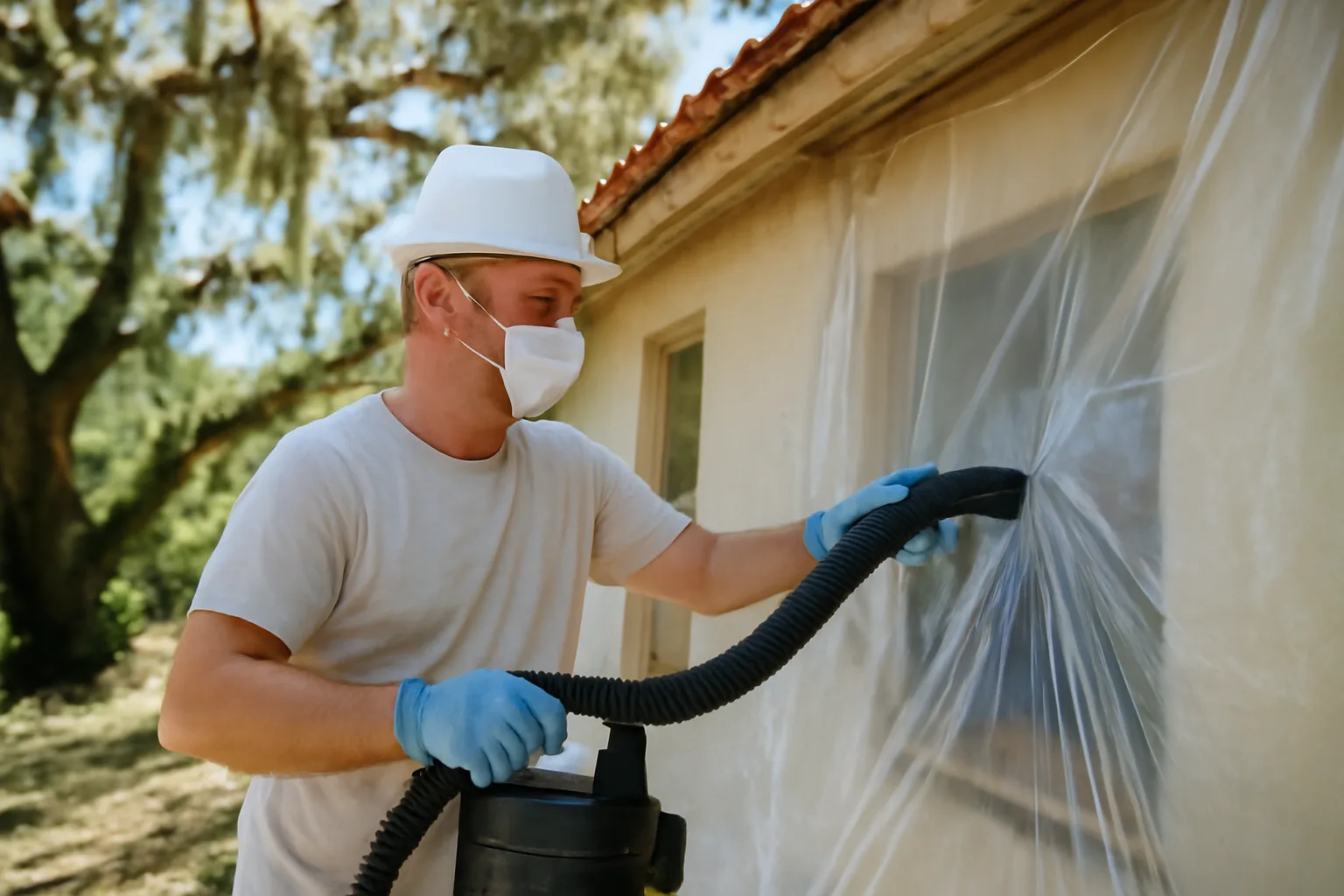
TL;DR
Lead RRP in Florida is a federal EPA program. Florida issues no state license for it. You need one EPA-accredited training course and EPA firm certification. The firm certification costs $300 for five years. Training runs $200 to $300 per person. After you submit your application and fee, you can legally start work 90 days later, assuming no denial.
Do you need a license for lead RRP in Florida?
No. Florida issues no state lead RRP license. The state runs no EPA-authorized renovation program, so the federal rule applies directly [3]. What you actually need is EPA firm certification plus at least one certified renovator on the job.
This trips up a lot of contractors, because Florida does license lead abatement contractors through the DBPR [7]. That license is for permanent lead removal, not the routine renovation work covered by the EPA's Renovation, Repair, and Painting rule. Scraping paint, replacing windows, or any work that disturbs more than six square feet of interior paint or twenty square feet of exterior paint in a pre-1978 building puts you under the federal rule. No state license. No extra state fee. Just the EPA.
What exactly is lead RRP in Florida?
The EPA's RRP rule covers anyone paid to work on target housing or child-occupied facilities built before 1978. General contractors, painters, handymen, plumbers, electricians, remodelers. If you disturb paint that counts as lead-based, meaning it contains lead at or above 1.0 mg/cm² or 0.5% by weight, you follow lead-safe work practices [5].
Roughly 60% of Florida housing units were built before 1980. That's a lot of old paint. The rule doesn't force you to test every surface. You either assume lead is present or use an EPA-recognized test. Most contractors assume. It's faster and usually cheaper than testing every job. Once you assume, you run the containment, work practices, and cleanup steps the rule spells out.
How to get EPA certified for lead RRP in Florida
Two steps: get trained, then get the firm certified. You or one of your employees attends an EPA-accredited initial training course. It runs eight hours and happens in person. EPA hasn't approved any fully online initial course. The class covers lead-safe work practices, cleanup, recordkeeping, and a hands-on skills assessment. Pass the exam and that person is a certified renovator.
Then your company applies for EPA firm certification. You fill out the application, pay the $300 fee, and list your certified renovator [1]. There's no separate individual license beyond the renovator's training certificate. EPA issues a firm certificate good for five years. Find accredited Florida trainers through EPA's provider search tool [4]. Plenty of firms wait until a job forces the issue. Getting certified ahead of time lets you bid the second the phone rings.
How much does lead RRP certification cost in Florida?
The EPA firm certification fee is $300. That's the only fee EPA charges, and it covers the full five-year period [1].
Training is the variable part. The EPA's Small Entity Compliance Guide states plainly that "the cost of a training course typically ranges from $200 to $300" per person [2]. Checking Florida course listings, that range still holds in 2026. Some providers charge $250, a few push $400. I've never seen a real course under $200. If you're the only one who needs training, budget $250 and you'll be fine. Crew of four? Multiply.
After that, small stuff. Maybe a respirator fit test if you choose to use respirators (not required for all RRP work, though many firms do), some plastic and tape for the hands-on portion, and your time. That's the whole list. No state surcharge, no Florida-specific exam fee, no business license tied to lead RRP. The DBPR doesn't regulate this work.
How long does the lead RRP process take in Florida?
Training takes one day. Most courses run 8 a.m. to 5 p.m. with a test at the end, and you leave with a certificate.
Firm certification takes longer. EPA says you can legally start lead RRP work 90 days after they receive your complete application and fee [1]. That's a safe harbor. You don't need the paper certificate in hand to begin, as long as your application is pending. EPA's guidance says a firm may begin work "90 days after the date we receive your complete request, unless we deny your application before that date" [1].
In practice, EPA often moves faster. Submit everything correctly, pay the fee, and your certificate might land in 30 to 45 days. The rule just gives you the 90-day backstop. Worst case, plan on three months from mailing the application to starting jobs. If you already have a certified renovator on staff, you file the firm application and start work after the 90-day window, certificate or not.
Florida training providers: finding an EPA-accredited course
Use EPA's accredited training provider search for Florida [4]. It lists every active approved trainer, the courses they run, and contact details. Courses show up regularly in Miami, Orlando, Tampa, and Jacksonville. Some trainers travel to you for a group.
Initial training is always in person. Refresher courses can sometimes be taken online if the provider holds that approval. Confirm it in the EPA search. Call two or three providers and ask about the next open class, the price, and whether the exam fee is included. Most include it. You want a trainer teaching the EPA model curriculum, not something homemade. The model course is standardized, so the content matches everywhere. Pick the date that fits your schedule and book it.
What about Florida state lead rules? Do they add anything?
No. Florida layers nothing on top of the federal RRP program. The Florida Department of Health runs a lead poisoning prevention program, but that's about blood lead screening and case management, not contractor licensing. The DBPR issues lead abatement contractor licenses [7]. Do RRP-only work and you never touch the DBPR or the health department for it.
One nuance. Florida requires a general contractor's license for many projects, especially new home construction and large remodels. That license has nothing to do with lead safety. Some counties and cities also run their own contractor registration. Those are general business requirements, not lead-specific ones. Holding EPA firm certification does not waive any local business or contractor licensing you'd already need. Check your municipality.
Lead RRP vs. lead abatement in Florida: a critical difference
RRP is renovation work done safely when lead paint might be present. Temporary controls: contain the dust, clean up, verify. Abatement is permanent lead hazard elimination, removing or encapsulating lead paint as the whole point of the job. Mislabel your work and you can land in real trouble.
Advertise "lead paint removal" or take a job whose sole intent is eliminating lead hazards, and you likely need a Florida lead abatement contractor license from DBPR [7]. That path means different training, a state exam, insurance, and business registration. The EPA's RRP rule says it does not apply to abatement activities [6]. So if a homeowner calls to strip all the lead paint off a house, that's abatement. If they call to replace a window and you'll disturb some lead paint doing it, that's RRP. Hold that line.
Recordkeeping and ongoing compliance for Florida firms
EPA makes you keep records for three years: training certificates for each certified renovator, the firm certificate, lead-safe work practice checklists, occupant notifications (the "Renovate Right" pamphlet), and documentation if you use EPA-recognized test kits [2]. Paper or electronic, either works. Florida adds no extra recordkeeping.
During an EPA inspection, they ask for those records. They also watch your crew work. So train everyone on site, not only the certified renovator. Workers who aren't certified renovators still have to be trained on the job by the certified renovator, and you document that training too. The EPA's "Lead-Safe Certified Guide to Renovate Right" [8] is a good handout to read yourself, more useful for you than for clients.
Renewal: keeping your lead RRP certification active in Florida
Firm certification lasts five years. You reapply with EPA, pay the $300 fee again, and list your current certified renovator [1]. No special Florida renewal step.
Certified renovator refresher training happens every five years. It's a four-hour course, in person or sometimes online. Miss the deadline and the certificate expires, which means retaking the full eight-hour initial course. Schedule refresher training at least three months before your expiration date. There's no grace period, so don't cut it close.
What to do if you're crossing state lines
Work in multiple states and you'll hit a wall: some states run their own EPA-authorized lead RRP programs, which means a state-specific certification on top of or instead of the EPA's. Florida is EPA-run, so your Florida EPA firm certificate works in any other EPA-administered state. Cross into Alabama or Georgia (both EPA-administered) and you're fine. Head to California or Vermont and you'll need additional state certification.
We have detailed guides for each state. Start with how to start lead RRP in Alabama (/articles/state-guides/how-to-start-lead-rrp-in-alabama) for a neighboring example, or the lead RRP license in California (/articles/state-guides/lead-rrp-license-california) if that's on your radar. For another EPA-run state, how to start lead RRP in Arizona (/articles/state-guides/how-to-start-lead-rrp-in-arizona) covers the process there. Even nearby states like lead RRP license in Arkansas (/articles/state-guides/lead-rrp-license-arkansas) can differ on business requirements, so always check before you bid out of state.
Common mistakes that slow your Florida certification
The most frequent one: applying for firm certification before you have a certified renovator. The EPA form asks for your renovator's training number and date. Leave it blank, or pencil in someone who hasn't finished the course, and they reject the application.
Second, using a business name that doesn't match your legal registration. EPA wants the firm name exactly as it appears on your state business filings. Short forms or d/b/a names cause delays.
Third, forgetting the fee. Obvious, but EPA only processes your application after the $300 clears. Mail a check and the clock starts when they cash it, not when you drop it in the box. Pay online for faster turnaround.
Fourth, assuming online training counts for the initial course. It doesn't. EPA has not approved online initial RRP training as of 2026. Refresher only. Took an online bootcamp for the initial? It's not valid, and you'll fail an inspection.
LeadRRPPath paper kit: get your paperwork right the first time
Once training is done, the only thing between you and a valid certification is paperwork. The EPA forms are free online, but they don't come with a Florida-specific checklist, sample filled-out applications, or a step-by-step order of operations. That's the gap the LeadRRPPath one-time EPA RRP + State License Kit fills. It's $149 and covers the firm application through the recordkeeping templates, with a Florida guide that confirms there's no state addendum to trip over.
You don't need it. Every form is public. But if you'd rather have someone hand you the exact paperwork in order, with notes on what reviewers actually check, it's on the site. The same kit covers the federal process for any EPA-administered state, so it's reusable if you expand. I'm not a lawyer and LeadRRPPath isn't a law firm or a service company. It's a publisher. The kit is a reference, not a guarantee.
Frequently asked questions
Do you need a license for lead RRP in Florida?
No Florida state license is required. You need EPA firm certification and a certified renovator. Florida is an EPA-administered state with no program of its own. The DBPR does not issue an RRP license. Complete EPA-accredited training, apply for firm certification, and pay the $300 fee.
How much does lead RRP certification cost in Florida?
EPA firm certification costs $300 for five years. Training per person generally runs $200 to $300, per the EPA Small Entity Compliance Guide. Some providers charge up to $400. There are no Florida-imposed fees or surcharges. Plan on $500 to $600 for one person to be fully certified as both firm and renovator.
How long does it take to get lead RRP certified in Florida?
Training takes one day. For the firm application, you can begin work 90 days after EPA receives your complete application and fee, even without the physical certificate. Most certificates arrive within 30 to 45 days. Total time from deciding to get certified to being able to start jobs: three months at the outside.
Can I take the lead RRP initial training online in Florida?
No. EPA has not approved any fully online initial RRP training course. You attend an in-person, eight-hour course with a hands-on skills assessment. Online options exist only for the four-hour refresher course. Check EPA's training provider search for Florida in-person classes.
Do I need a certified renovator on every job in Florida?
Yes. The EPA rule requires a certified renovator assigned to each renovation project, either directly supervising or performing the lead-safe work. The certified renovator trains other workers on the job. One renovator can oversee multiple projects if they can reach each site as needed.
What if I'm a sole proprietor in Florida, do I still need firm certification?
Yes. If you operate as a business, even a one-person shop under your own name, you apply for EPA firm certification. The fee is the same $300. You list yourself as the certified renovator. If you work as an employee of another EPA-certified firm, you only need your renovator training, not your own firm certification.
Is there a Florida lead RRP board I need to register with?
No. Florida has no lead RRP board, state fee, or registration separate from EPA. The DBPR handles lead abatement contractors, not RRP. The Florida Department of Health runs lead poisoning prevention, not contractor oversight. Your only regulator for RRP is EPA.
How do I renew my lead RRP certification in Florida?
Firm certification: reapply with EPA every five years and pay $300. No extra Florida step. Certified renovator: take a four-hour refresher course every five years. If your renovator certification expires, you retake the full eight-hour initial course. Schedule refresher training at least three months before expiration.
Do I need a Florida general contractor license to do lead RRP work?
Lead RRP certification doesn't waive any general contractor or business license Florida or your local municipality requires. If you're doing construction that normally needs a license, you must hold it. The EPA certification only covers the lead-safe side of the work. Check with your county or city.
What's the difference between lead RRP and lead abatement in Florida?
RRP covers temporary controls during renovation work where lead paint might be disturbed. Abatement is permanent removal or encapsulation. Advertise lead paint removal and you likely need a Florida lead abatement contractor license from DBPR, which involves separate training, exams, and insurance. The EPA RRP certification does not cover abatement.
Can I do lead RRP on my own Florida home without certification?
Yes, if it's your own home that you occupy and you do the work yourself without paying anyone. EPA exempts owner-occupied housing when the owner does the work. EPA still strongly recommends lead-safe work practices. Hire anyone, even a friend paid in cash, and the exemption disappears.
What records do I need to keep for lead RRP in Florida?
Keep records for three years: certified renovator training certificates, the firm certificate, lead-safe work practice checklists, occupant notifications (the Renovate Right pamphlet), and any test kit documentation. Records can be paper or digital. EPA will ask for these during an inspection.
Sources
- EPA: Renovation, Repair and Painting Program, Apply for Firm Certification: Firm certification fee is $300, and firms may begin work 90 days after submitting a complete application unless denied earlier.
- EPA: Small Entity Compliance Guide to Renovate Right: Training course costs typically range from $200 to $300 per person, and records must be kept for three years.
- EPA: Lead Renovation, Repair and Painting Program, State and Tribal Programs: Florida has no EPA-authorized lead renovation program, so it is EPA-administered.
- EPA: Search for Accredited Training Providers for Lead-Safe Renovation, Repair and Painting: Search for EPA-accredited training providers in Florida.
- 40 CFR §745.83, Lead-based paint definition: Lead-based paint means paint or other surface coatings that contain lead equal to or in excess of 1.0 milligrams per square centimeter or 0.5 percent by weight.
- 40 CFR §745.82, Applicability of the RRP rule: The RRP rule does not apply to abatement activities as defined in the regulation.
- Florida DBPR: Lead Abatement Contractor Application: Florida requires a state lead abatement contractor license for permanent lead hazard elimination work.
- EPA: Lead-Safe Certified Guide to Renovate Right (pamphlet): EPA's guide to lead-safe renovation practices for contractors and homeowners, used as the required occupant notification.