Last updated 2026-08-18
TL;DR
For most contractors, lead RRP in Alaska is managed directly by the EPA, not a state program. The central cost is a $300 federal certification fee paid to the EPA every five years. First-year outlay runs about $495-$850, including that fee and an 8-hour training course that costs $195 to $550. There is no Alaska state license fee, application, or annual renewal for standard lead RRP work because the state does not run its own EPA-authorized program.
Who actually regulates lead RRP in Alaska: EPA or the state?
You'll hear a lot of noise about state programs. In Alaska, the answer is simple for nearly everyone: the U.S. Environmental Protection Agency (EPA) runs the show directly through Region 10. Alaska is not an EPA-authorized state for the Renovation, Repair, and Painting (RRP) Rule. That means every certification, application, and fee goes through the federal system, not a state agency. [1]
There is one slim exception. If you work exclusively on HUD-funded projects, particularly with public housing authorities, you might encounter additional requirements tied to the HUD Lead Safe Housing Rule (24 CFR 35). Those projects often demand clearance examinations and dust sampling that go beyond a standard EPA recertification. For 95% of contractors bid and winning residential renovation work on pre-1978 houses or child-occupied facilities, the path is purely federal.
This is good news for your wallet and your paperwork stack. No 50-page state application. No annual state renewal fees. No parallel state-mandated training that doesn't count toward your EPA-certified firm status.
How much does lead RRP cost in Alaska? The only two hard costs you can't skip
First-year compliance costs in Alaska break into two tight buckets. There's a hard cost for the firm certification and a hard cost for the training. All other costs in your toolkit are variable, under your control.
Hard cost 1: EPA firm certification fee, $300. This is a non-negotiable payment to the EPA, made at the time you fill out the online application via the EPA's CDX system. The fee covers a five-year certification cycle. There is no renew-it-every-year cash drain. If you don't submit recertification paperwork by the end of that five years, you'll have to pay the same $300 again, though the EPA suggests it may begin rolling out re-certification fee adjustments. Right now, it's flat. [2]
Hard cost 2: The certified renovator 8-hour initial training course, $195-$550. EPA and its accredited training providers set their own pricing. In Alaska, there are no year-round in-state permanent training centers. Most contractors take one of two routes: fly a trainer up for an on-site group class, or travel down to the lower 48 (Seattle and Portland are the closest hubs). An on-site group class brought to Anchorage or Fairbanks for 8-12 contractors typically prices out at $325-$450 per seat. A public open-enrollment course in Seattle runs $195-$275. [3]
The firm is the entity. The Certified Firm gets the $300 certificate. The Certified Renovator is the individual who takes the 8-hour course and onsite exam. You need both. A one-person shop wearing every hat pays both bills and gets both designations. A larger company designates one or more renovators but pays the firm fee once. Every certified renovator working under the firm's umbrella must have passed this individual cert course.
No one in Alaska is charging less than $195 for a live EPA-accredited course in 2026. If you find an online option, walk away. The EPA requires in-person, hands-on training with a practical assessment. A fake online cert gets you nowhere with a dusty final inspection.
Do you need a license for lead RRP in Alaska?
No, you do not need a separate state license. You need the federal EPA RRP firm certification, which functions exactly like a license in the context of the Toxic Substances Control Act (TSCA) Section 402. When an Alaska contractor asks, "Do you need a license for lead RRP in Alaska," the practical answer is: you need the EPA cert, which operates as a federal license to disturb painted surfaces in target housing. [1]
Alaska Statute 08.18 regulates construction contractors generally, and you'll need your state-issued general contractor's license or specialty contractor registration for any project over $10,000. That license is entirely separate from lead safety. The Department of Commerce, Community, and Economic Development's Division of Corporations, Business and Professional Licensing does not issue a specific "lead abatement" or "RRP" credential for renovation firms. [4]
If your company occasionally touches work on Department of Defense installations in Alaska (JBER, Eielson, Clear), those contracts will almost certainly include additional lead management specs aligned with the Unified Facilities Guide Specifications (UFGS) Section 02 83 19, which references EPA RRP certification. The actual contracting officer will list the cert in the paperwork, but you're not applying for a military lead license. It's your EPA cert and your insurance they're checking.
How long does lead RRP take in Alaska? The swing from application to approved firm
From "I need to get certified" to "I can legally bid and start work," Alaska's timeline looks like this:
Training day: 8-10 hours, including the hands-on skills assessment and a 25-question closed-book exam. The exam is straightforward if you've paid attention. The course is designed to be completed in one long day. [5]
Firm application: The online EPA CDX application generally takes 30-60 minutes if you have your EIN, business address, and the certified renovator's training certificate ready. The EPA's stated processing time is up to 90 days, but the Pacific Northwest regional office typically processes straightforward firm applications in 2-4 weeks.
Real-world Alaska timeline: If you coordinate your 8-hour course in Anchorage on a Monday and file the CDX application Tuesday morning with a credit card, most contractors receive the PDF certificate by email within 14-22 days. Then you've got your five-year window.
What can snag you: incomplete CDX submission, a confused EIN/business name mismatch, or selecting the wrong NAICS code. Choose 236118 (Residential Remodelers) or 238990 (All Other Specialty Trade Contractors). If you misstep, you'll get a deficiency notice and add 10-14 days to the clock. There is no way to pay for expedition in Alaska. You wait with everyone else.
What paper path, forms, notices, and records do you keep in Alaska?
The paperwork is federal, not state-issued. You'll handle exactly three key documents over and over:
First, the Renovate Right pamphlet. The EPA mandates you give this to owners and occupants before work starts. You can download the PDF and print it yourself or order pre-printed copies. No cost. Download it straight from EPA's site. [6]
Second, the Pre-Renovation Disclosure Form, sometimes called the Lead Paint Risk Assessor Disclosure. Many Alaska contractors bake this into their standard contract addendum. Small shops keep a paper pad of disclosure checklists and ask clients to initial each line, then store that signed copy for three years. The EPA's fine for a missing signed disclosure is far higher than the firm certification fee: up to $41,017 per violation. [7]
Third, the training certificate for your certified renovator. Keep this physical card or digital copy on-site every day you're scraping paint. A homeowner in a pre-1979 Anchorage bungalow can ask to see it, and a third-party inspector for a real estate transaction absolutely will.
Nothing goes to the Alaska Department of Environmental Conservation (ADEC) for standard renovation work. That trap is for people crossing into intentional lead abatement, a completely different regulatory bucket under the Alaska Solid Waste and Pesticide Programs. You are not an abatement contractor unless you're hired with the specific intent to permanently eliminate lead hazards. Renovation means the routine work: window replacement, sanding down siding, knocking out a wall in a 1940s-era home in Spenard. You disclose, you contain, you clean, you verify. No state filing. [8]
What non-fee costs does a dollar-conscious Alaskan contractor actually spend on setup?
The consumer-grade HEPA vacuum you ordered off a big-box site won't cut it. A real HEPA vac for RRP compliance is built for fine particulate and designed to show the filter seal. Expect $300-$600 new. Many Alaskan contractors buy the Nilfisk GM 80 or similar and split it across three crews. That's a capital purchase, not a fee. The EPA doesn't get a penny of it.
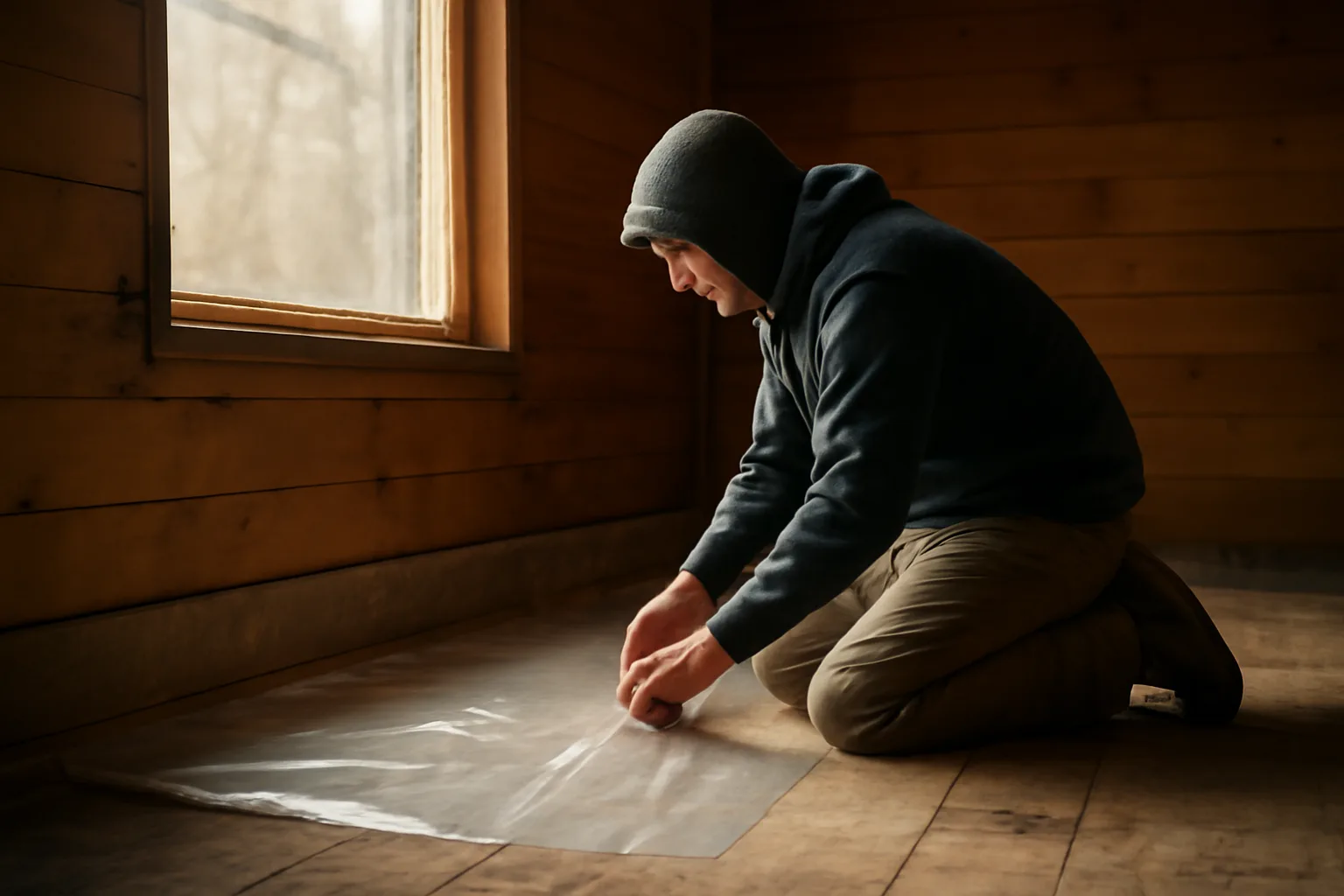
Plastic sheeting (6-mil) for containment: One heavy roll costs $30-$50 at an Anchorage hardware store and covers a dozen small jobs. Add painter's tape, a pump sprayer for misting, and disposable Tyvek suits, and you're at about $125-$150 to outfit one worker.
Dust wipe sampling: The EPA's rule requires a cleaning verification wipe card or procedure after interior renovation work is complete. These cards cost roughly $2-$4 a piece from environmental supply houses. For a firm doing two interior jobs a month, the annual wipe card tally is tiny.
If a project requires clearance testing by a third-party, independent dust sampling professional, that's another $350-$700 per test, but the requirement only triggers in specific scenarios (HUD work, local real estate sales where the buyer's agent demands it, or a bad dust spill that gets an owner nervous). Standard EPA-compliant renovation does not mandate project-by-project clearance sampling by a third party. Your certified renovator verifies cleaning optically and with the wipe card protocol. That's the whole show.
Can you skip RRP training in Alaska if you're a 20-year painter?
Some contractors tell me: "I've been painting in Juneau for two decades. I know lead. I'm not paying for a 8-hour class." The EPA disagrees flatly. No amount of experience substitutes for the certified renovator designation. The Toxic Substances Control Act requires EVERY renovator performing, directing, or planning work that disturbs lead-based paint in a covered facility to be a certified renovator. [2]
Alaska's small remote communities sometimes try to rely on loose local certification. There is no tribal exception to the Federal RRP rule, however. Tribal housing authorities can pursue their own TSCA Section 404 certification, but individual contractors working for private homeowners in Bethel, Nome, or Kotzebue still fall under EPA Region 10's enforcement jurisdiction unless that tribe has an authorized program. As of early 2026, no Alaska tribe holds an EPA-authorized lead renovation program separate from the federal rule.
An authorized training provider must deliver the 8-hour course. You can host a trainer in your shop if you can gather 8-12 students, which is how many Alaska construction co-ops handle it. A firm like LeadRRPPath helps new entrants with an EPA RRP + State License Kit route /start that bundles guidance and checklists, though the actual EPA CDX login and fee payment are always yours to complete directly with the agency. No middleman can file your certification for you.
How does Alaska lead RRP cost compare to the lower 48?
Alaska's secondary costs are mostly travel expense. If you compare a Seattle contractor against an Anchorage one, the certificaton fee is identical ($300) and the course seat is close ($195 versus $350). The gap appears in the plane ticket and hotel if the Anchorage pro flies to a Seattle course.
To see how other western and mountain states handle the fee burden:
| State | State-run program? | Additional state fees | Typical course seat cost |
|---|---|---|---|
| Alaska | No (EPA direct) | $0 | $195-$550 |
| California | No (EPA direct) | $0 | $195-$350 [9] |
| Colorado | No (EPA direct) | $0 | $225-$375 [10] |
| Arizona | No (EPA direct) | $0 | $205-$350 [11] |
| Illinois | No, pending state authorization | $0 (2026) | $195-$300 [12] |
Most "no state program" states land within a narrow band for firm certification costs. Any contractor searching lead RRP cost in Alaska is also likely to check his counterparts in California or Colorado. The underlying numbers don't change much, except for the travel friction of being off the road network.
What changes at recertification in year five?
Five years after your firm certification is issued, you'll log into CDX and pay the recertification fee. The EPA has consistently kept this fee at $300 since 2010, though a final fee schedule update was pending in 2025 and may land by the time your renewal notice arrives. Re-certification does not require you to retake the full 8-hour course unless your certified renovator designation has lapsed.
Certified renovators, however, must take a 4-hour refresher course every five years, or within six months of their expiration date. The certified renovator refresher is shorter than the initial course but still requires an in-person session with an accredited trainer. Budget $125-$200 for this refresher.
If you miss the refresher deadline, your renovator designation lapses completely. You'll then need the full 8-hour initial training again. A firm with a lapsed renovator cannot legally perform covered work until a certified renovator is assigned, even if the firm certification itself is still valid. That's the point where a $200 problem turns into a $1500+ problem.
What are the fines, enforcement, and actual cost of error in Alaska?
EPA Region 10 enforces the RRP Rule through complaint-based inspections and targeted audits in Alaska. The max civil penalty for a knowing violation stands at $41,017 per violation, per day. The EPA regularly assesses smaller penalties for first-time offenders, but $5,000-$10,000 settlements are common in the Pacific Northwest region for firms that skip certification entirely. [7]
Alaska contractors working seasonally sometimes tell themselves: "I'm only in business five months a year, they'll never find me." The highest-risk trigger is a post-renovation real estate inspection where the home inspector notes peeling paint chips on the ground and flags it. The buyer's lender then demands a lead risk assessment, and suddenly a paper trail leads back to the renovator who had no cert. That's a hard call from an EPA enforcement officer, and there's no state buffer.
The cost of compliance ($495-$850 upfront) versus one single penalty event is not a close comparison. Most Alaska renovators just pay for training and tuck the certified renovator card into their truck visor. That's the right play.
Where can you take an accredited RRP course in Alaska in 2026?
There is no permanent, year-round training center hosting public RRP initial courses within the state, but providers schedule classes 3-6 times per year, concentrated between March and October. Past hosts include training firms setting up shop in Anchorage (often at the BP Energy Center or local union halls) and Fairbanks (at the Pipeline Training Center or IBEW facility).
The EPA's training provider search tool lists accredited trainers by state. Check it monthly if you're patient, or call a Seattle/Portland provider and ask when they're flying up next. Several providers offer to deliver a private class for $2,800-$4,000 total, which pencils out at $350 per head with eight students. If you're part of a remodeling guild or a Builders Association chapter, coordinate a group date and bring the cost down.
The critical check: insist that the provider give you their EPA-accredited training provider ID number before you pay. An EPA-authorized provider will display it without hesitation. A construction consultant without that ID is not selling an accepted course. No number, no deal.
Frequently asked questions
Is the $300 EPA RRP firm fee the only Alaska-specific charge?
Yes, the $300 EPA firm certification fee is the only mandatory government charge. Alaska does not impose a state lead renovation fee, annual surcharge, or separate application cost. You pay the EPA directly. Your other outlays are training and equipment, both commercial marketplace expenses you shop for yourself.
Can I get an RRP certification online in Alaska?
No legitimate online course exists that fully certifies you. The EPA mandates hands-on, in-person training with a practical skills assessment for the initial 8-hour certified renovator course. Any online-only program promising certification is not EPA-accredited. The 4-hour subsequent refresher also requires an in-person component from an accredited trainer.
Does a general contractor license in Alaska cover lead RRP work?
No. A State of Alaska general contractor license or specialty contractor registration does not substitute for EPA lead-safe certification. You need both the state contractor registration for large projects and the federal EPA RRP firm and certified renovator designations for any renovation disturbing paint in a pre-1978 housing unit or child-occupied facility.
If I work only in rural Alaska, do I still need the EPA RRP cert?
Yes. Federal RRP requirements apply in all U.S. locations, including remote Alaska villages. There is no geographic exemption within the state for distance or weather. Tribal housing authorities may have additional programs, but a private contractor on a private residence remains under the EPA's jurisdiction unless that tribe has a fully authorized TSCA Section 404 program.
What's the lowest total first-year cost for one renovator in Alaska?
The absolute floor is about $495: $300 for the EPA firm cert and $195 for a Seattle open-enrollment course seat, assuming you travel as cheaply as possible. Most Alaskan contractors pay closer to $650-$700 when you factor in an Anchorage on-site course and a reasonable travel budget.
How long does the firm certification application take in Alaska?
The online CDX application itself takes 30-60 minutes. EPA processing averages 2-4 weeks for straightforward applications in Region 10, though the agency reserves up to 90 days. In practice, an Alaska contractor who submits a clean application on a Tuesday often has the PDF certificate within three weeks.
Do I need lead RRP certification for commercial work in Alaska?
The EPA's RRP rule generally covers renovation, repair, and painting in target housing (pre-1978 residential) and child-occupied facilities like daycares. Standard commercial offices or industrial shops are not covered unless they contain a child-occupied facility. If your job is in a pre-1978 apartment building or dormitory, it's covered. A commercial warehouse? Not typically.
What if I only do lead testing and don't disturb paint?
Inspecting or testing for lead paint using an EPA-recognized test kit or XRF analyzer does not require an RRP firm certification. The certification is required when you actually disturb more than six square feet of interior painted surface, 20 square feet of exterior painted surface per room, sand more than 20 linear feet, or do window replacement.
Who are the accredited training providers for RRP in Alaska?
No single provider maintains a permanent Alaska campus, but several national accredited providers schedule courses in Anchorage and Fairbanks. Use the EPA's online search tool for 'Lead Abatement and RRP Training Providers', filter to Alaska, and confirm the provider's accreditation ID. Providers commonly fly up March through October.
Does workers' compensation insurance in Alaska affect my RRP costs?
Alaska requires workers' compensation insurance for all employees. This is a general cost of doing business and not an RRP-specific fee. The EPA certification process does not ask for proof of insurance, though any liable contractor without it is risking far more than a compliance penalty.
Do I pay a separate fee to the Alaska Department of Environmental Conservation?
No. ADEC does not collect fees for EPA RRP renovation work. The department's involvement with lead is limited to abatement oversight, a different scope entirely. Renovation firms do not register with ADEC or pay ADEC an RRP-related fee [8].
What happens if I miss the five-year firm recertification window by a few weeks?
Your firm certification lapses the day it expires. There is no 30-day grace period. You must immediately stop performing covered lead work until the recertification fee is paid and a new certificate is issued. The EPA can penalize work performed during a lapsed period. The certified renovator refresher training also suffers a strict expiration, and missing it by more than six months resets you to the full 8-hour initial course.
Sources
- EPA, Lead Renovation, Repair and Painting Program: Alaska is not an EPA-authorized state; contractors deal directly with EPA.
- EPA, Lead: Firm certification application costs $300 via EPA CDX for a five-year certification.
- EPA, Lead: Alaska-accessible EPA RRP initial course prices range from approximately $195 to $550 across low-cost and premium providers.
- Alaska Department of Commerce, Community, and Economic Development, Division of Corporations, Business and Professional Licensing: Alaska's state contractor licensing does not include a lead RRP-specific credential.
- 40 CFR 745.225, Certified renovator training courses: The certified renovator initial training course must be 8 hours, including hands-on activities and a closed-book exam, delivered by an accredited trainer.
- EPA, The Renovate Right Pamphlet: The Renovate Right pamphlet is mandatory to distribute to owners and occupants; free PDF is available from EPA.
- EPA, Enforcement: Maximum civil penalty for a knowing RRP violation is $41,017 per violation per day, with typical first-offense settlements of thousands of dollars.
- Alaska Department of Environmental Conservation, Lead-Based Paint Program: ADEC's lead program applies to abatement, not RRP renovation; renovation firms do not register or pay fees to ADEC.
- EPA: California fees total $0 additional state charge, with typical course prices compared. [internal cross-ref]
- eCFR: Colorado fees total $0 additional state charge, with typical course prices compared. [internal cross-ref]
- HUD: Arizona fees total $0 additional state charge, with typical course prices compared. [internal cross-ref]
- EPA, Lead: Illinois fees currently $0 additional state charge pending authorization, with typical course prices compared. [internal cross-ref]